When we talk about the 'Fourth Wall' often theatre is brought to mind, however it is also used in the film and television industry aswell.
Breaking the fourth wall is where the characters acknowledge their fictionality, they do this by addressing the audience. When this is done in film its often used to draw the audience in, this is often risky, as it could look cheep, or cheesy. However in some cases it works perfectly. It gives the audience a bigger insite into the story world and makes them relate to the character.
Wednesday, 28 September 2011

Don LaFontaine and Voice Overs.
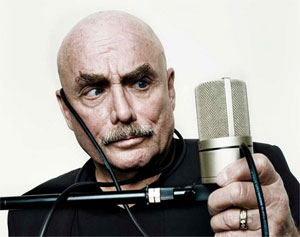 Don LaFontaine may be an ufamiliar name, his voice however, is most likely one of the most recgonised. He is the man that does the voice over for many huge blockbuster films. His basey voice is the opening narrative for a lot of famous films. His voice helps to set scenes, create connections to character and inform audiences. Although his voice is one of the more striking and recognised ones, as long as you have a clear voice which can project affectively then narration is a great way to open a film sequence.
Tuesday, 27 September 2011
How Fargo Contradicted Expectations.
 Fargo was sold as a triller, on reflection of watching the film it became very much apparent that some key things juxtaposed the common, stereotypical expectations of the thriller genre, for example:
- Hardly Any Suspense
- Fairly easy plot
- No twists
- A lot of dialogue
- Not eerie
- Dont build a relationship with any characters
- Set in snow- white, a paradox of the usual 'Dark' setting
- Flat ending
- Olderfilm- so lacked intensity
- Unclear about overall tone of the film
- Limited action sequences
- Almost comic characters and scenes.
Conventions of Main Stream Thrillers
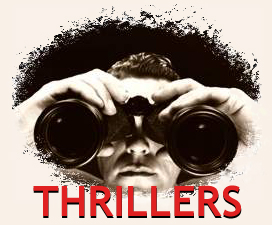 Thrillers are often thought about as films that rely heavily on stimulating the mood of audiences, most commonly stimulating the mood of anticipation or anxiety. Some devices used in novels are used, such as cliff hangers and red herrings. Also there is a lot to do with editing devices, such as quick cuts and strange camera angles. Also a huge convention is the lighting, stereotypically thrillers are very dark films, so things can lurk in the shadows etc. Often there will be a character that the audience relates with, that character will most likely get themselves into danger, this will result in the audience on the edge of their seats.
Tuesday, 20 September 2011
COEN Brothers - Filmography.
COEN Bro's
 Joel Coen and Ethan Coen are professioanly known as the Coen Brothers, they work in partnership as American Film Makers. They both are aclaimed writers, directors and producers, however recently Joel got awarded for directing and Ethan for producing. After graduating Joel worked as an production assistant on some films and a couple of music videos. This would stand him in good stead and he developed a talent for editing. Following this, he became an assistant editer on the film 'The Evil Dead' (1980). The brothers then worked together writing and directing their first film- 'Blood Simple'. Blood Simple was a horror, which has a simple plot line however with underlying twists, it also housed dark humour and mise en scene. This film was a success, and promted the brothers to win an award at Sundance. The next film endeavour was 'Crimewave' another success. The Coen brothers are still creating film masterpieces to this day. It could be argues that now the brothers are more established they aim to a much more left field audience. Its clear they like to move away from the main stream and try and tackle new challenges in the highly competative film world. They seem to juggle around genre and escape from the modern stereotypes film tend to have these days. Often they will try and put to opposing genres together, such as triller and comedy. With their tallent and understanding of what the public wants, this usually proves to be a big hit.
Last Ten Films-
1. True Grit (2010)
2. A woman, a gun, and a noodle shop. (2009)
3. A Serious Man. (2009)
4. Burn After Reading. (2008)
5. No Country for Old Men. (2007)
6. Paris, Je T'aime. (2006)
7. The Lady Killers. (2004)
8. Intolerable Cruelty. (2003)
9. The Man Who Wasnt There. (2001)
10. O Brother, Where Art Thou? (2000)

Last Ten Films-
1. True Grit (2010)
2. A woman, a gun, and a noodle shop. (2009)
3. A Serious Man. (2009)
4. Burn After Reading. (2008)
5. No Country for Old Men. (2007)
6. Paris, Je T'aime. (2006)
7. The Lady Killers. (2004)
8. Intolerable Cruelty. (2003)
9. The Man Who Wasnt There. (2001)
10. O Brother, Where Art Thou? (2000)
Exploring Genre Through Analysis of Film Openings
Dawn of the Dead- Zack Snyder.
Denotation and connotation.
Denotation and connotation.
- Image of the skull - we now know that death will be a key theme.
- Green coloured Walls in the hospital - makes us think of sick, illness, uneasy.
- She keeps checking her watch - she's ordinary, she does long shifts, works hard.
- Emmergency sign behind her shown- this forshadows later events.
- Forms a relationship with girl - establishes she may be a key character.
- Picure of couple shown - theyre in a loving long term relationship.
- Girl appears in dimmed lights - fear of the unknown.
- Woman deals with the situation - shes a strong character, coping under pressure.
- 'Cabin Fever' - Title forshadows, thinks of isolation.
- Titles last a long time - slowely lowering us into the story world.
- Establishes location and setting - we realise theyre in isolation.
- Lone dodgy looking man - sets an eerie tone.
- Cuts quickly to american girl (civilisation) - sets up, worlds colliding.
- Home made movie of little girl - she will be a significant character.
- Little light, drab and grey - negative feeling, tired and down.
- He wraps a present precisely - He does things well, takes care, perfectonist.
- Negative attitude between parents - dysfunctional relationship, could change.
- Reflectng on past - he misses the strong bond with daughter, significant.
Mise-En-Scene
Mise-En-Scene is all about what you see in the frame yourself, its a french term that means 'what is put into the frame'. It's visual information infront of the camera, it communicates essential information to the audience.
When thinking about creating a frame, you must consider that even the way you move in the scene, could forshadow, also the way in which things are positioned may be pivitol. Its clear that you communicate more than whats not actually being said.
5 Elements-
1) Setting and Props- settings are pivitol, sometimes stereotypically TV uses less of setting because TV is smaller than cinema film. Although images of location are sometimes important on establishing character, theme and genre.
2) Costume, Hair and Makeup- this is extremely important when introducing what genre and era, normally as soon as we see a character, we have made up our minds about the two of these. It also helps to introduce the characters personality.
3) Facial expressions and Body Language- In general life aswell as film this is key to the understanding peoples thoughts. Often in film and television facial expressions and body language is emphasised by camera's zooming in, or focusing on a certain action.
4) Lighting and Colour- This is key to finding out what the genre is, and the mood or the theme of either the entire film, or just a certain characters personality.
5) Positioning of character/objects within in the frame- Important objects could be positioned so that it draws the reader in to look at them. This could because they are of some relevance or importance later on. Positioning of character could to show parts of their personality, they may be behind or bellow someone to show hierarchy for example.
When thinking about creating a frame, you must consider that even the way you move in the scene, could forshadow, also the way in which things are positioned may be pivitol. Its clear that you communicate more than whats not actually being said.
5 Elements-
1) Setting and Props- settings are pivitol, sometimes stereotypically TV uses less of setting because TV is smaller than cinema film. Although images of location are sometimes important on establishing character, theme and genre.
2) Costume, Hair and Makeup- this is extremely important when introducing what genre and era, normally as soon as we see a character, we have made up our minds about the two of these. It also helps to introduce the characters personality.
3) Facial expressions and Body Language- In general life aswell as film this is key to the understanding peoples thoughts. Often in film and television facial expressions and body language is emphasised by camera's zooming in, or focusing on a certain action.
4) Lighting and Colour- This is key to finding out what the genre is, and the mood or the theme of either the entire film, or just a certain characters personality.
5) Positioning of character/objects within in the frame- Important objects could be positioned so that it draws the reader in to look at them. This could because they are of some relevance or importance later on. Positioning of character could to show parts of their personality, they may be behind or bellow someone to show hierarchy for example.
Tuesday, 13 September 2011
Initial Ideas.
After I discovered what what my brief was ( to create the opening of a feature film in any genre to last 2 minutes), I had a quick brain storm in order to think of ideas.
I thought that it might be easier to try and create my story from something that had happened in my life. I didnt want to create a typical teenage film, so I had to really think about how I could incorporate something that wouldn't come across soppy or insignificant.
After a long think, i recalled an event that happened that i could dramatise and make more interesting.
I recently found my mothers diary from when she was the same age as me, and as her and I don't have a particularly close relationship with my mother, I was intrigued to find out that in fact we lead extremely similar lives at that age.
Although just from that I realised it wasn't a very interesting story, I quickly began to think of ways that i could develop it.
I knew immediately that this was the story i wanted to create the opening two minutes for. It would be something that i could get extremely involved in, because really it was a story about me. I could use my own emotions and filter them into making a film that i truly cared about.
Subscribe to:
Comments (Atom)