
The four main types of audiences are:
1. Mainstream Only- only see the big block busters, and nothing else.
2. Mainstream Plus- see mainstream hits, but dip into specialised occasionally.
3. Aficionados- associate themselves with specialised, still view some mainstream.
4. Buffs- Often reject mainstream cinema.
Mainstream Plus:
Their looking for 'good' film, usually find a mainstream film which satisfied their need to watch a film.
When thinking about the target audience for the film that im going to create the opening for, I want my target audience to be Mainstream Plus. Although some people may think that its an obvious and easy choice. I think that its the most interesting one to explore and probably has one of the widest audiences. Although i would loved to have dabbled into the realms of aficionados or film buffs, i think it would have been to much of a challenge. Im not sure that i could have ticked off all the criteria if I chose a less mainstream target audience.
Also, i feel that i have a wider knowledge of mainstream. However as a media student personally i have dabbled in aficionado films, I think that creating this film in mainstream means that im staying in my comfort zone.
Monday, 12 December 2011

My Opening Title Sequence Ideas.
After doing a lot of research into how other people, my classmates and professional films have created their title sequence I have chosen to do something that looks a bit more homemade.
I wanted to try and animate rather than just having writing appear on my screen.
Because the genre of the film that I have chosen is a drama, i wanted to try and make it look like it had been created by an independent film industry.
I took a long time deciding what my production company would be called, after a lot of thought, I settled with 'Scribble Works'. I thought it sounded quite interesting, and fitted with my film.
My next task was to think of ways to animate the titling sequence. I thought of things that connected with the title. I eventually came up with the idea of a pencil, or a pen scribbling, and the words of the production company appearing.
I created the pencil drawing in photoshop and imported to Adobe After Affects, I found a font which looked like it had been written.
I then had to begin the hard and tricky process of animating it. After a couple of hours of fiddling around with the opacity and rotating the pencil copious times, i felt i had something to be proud of. However I can see that it will be one of those things that i will go back to and fiddle with, until its totally perfect.
I know feel a lot more confident with using After Affects. I think that i can effectively create anything and i know that i could ask any of my class mates and they would be more than capable to help.
I wanted to try and animate rather than just having writing appear on my screen.
Because the genre of the film that I have chosen is a drama, i wanted to try and make it look like it had been created by an independent film industry.
I took a long time deciding what my production company would be called, after a lot of thought, I settled with 'Scribble Works'. I thought it sounded quite interesting, and fitted with my film.
My next task was to think of ways to animate the titling sequence. I thought of things that connected with the title. I eventually came up with the idea of a pencil, or a pen scribbling, and the words of the production company appearing.
I created the pencil drawing in photoshop and imported to Adobe After Affects, I found a font which looked like it had been written.
I then had to begin the hard and tricky process of animating it. After a couple of hours of fiddling around with the opacity and rotating the pencil copious times, i felt i had something to be proud of. However I can see that it will be one of those things that i will go back to and fiddle with, until its totally perfect.
I know feel a lot more confident with using After Affects. I think that i can effectively create anything and i know that i could ask any of my class mates and they would be more than capable to help.
Sunday, 4 December 2011
Film Synopsis
"Dear Diary"
Drama
Mainstream Plus
Logline: A journey to abolish unforeseen parallels between a mother and daughter, torn by a number of hidden truths and inevitable similarity.
Opening: During the opening credits a young girl, around 13 years old will be seen running down a long track, clutching a red diary. There will be soft music playing and the voice of a slightly older girl will begin a narrative which will set up the rest of the film.
Whilst the young girl is running, it will flash back to images of a note book or diary flicking through the pages, the writing will be difficult to read. Then back again to the girl running. Flash back once again to old family photos and old fashioned objects. Finally the girl runs to the end of lane and almost collapses on a sty, out of breath.
Drama
Mainstream Plus
Logline: A journey to abolish unforeseen parallels between a mother and daughter, torn by a number of hidden truths and inevitable similarity.
Opening: During the opening credits a young girl, around 13 years old will be seen running down a long track, clutching a red diary. There will be soft music playing and the voice of a slightly older girl will begin a narrative which will set up the rest of the film.
Whilst the young girl is running, it will flash back to images of a note book or diary flicking through the pages, the writing will be difficult to read. Then back again to the girl running. Flash back once again to old family photos and old fashioned objects. Finally the girl runs to the end of lane and almost collapses on a sty, out of breath.
Tuesday, 29 November 2011
Story Task
In class, we were told to write an opening paragraph about a man names Ross, our stories could take any direction, and as we came to the end of each paragraph, the person sitting next to us had to continue the story. So by the end of the little story it had gone right round half of the class. This is how my story turned out:
Ross, a 21 year old male woke and looked around him, he was lying in his own bed. He rolled on to his side and saw a small piece of note paper laying strategically placed. Realising he was wearing his clothes from last night - a shirt and jeans, he began to wonder what actually happened the night before. He picked up the note, but before he could read it, he caught his reflection in the mirror. His dark short hair was ruffled and messy. His brown eyes looked heavy and tired. Once Ross' eyes focused he realised the slightly faded lipstick mark on his cheek. As he stood open the curtains, he stumbled slightly, nearly knocking his head on the curtain rail.
He picks up the note and walks to the bathroom, after washing his face, he sits down and opens the note, he slowly reads the quickly scribbled note over a couple of times, folds the note in half and and puts it in his trouser pocket.
He moves to the front door. Thinks to himself for a minute, with a solemn expression and walked through the door, closing it gently behind him.
Outside laid his work colleague Ben, he was face down in the flower bed, with no top on. Ross went over to him to wake him up. Just as he knelt down, Ben wearily tried to lift himself up from the dirt, picking off clumps of soil from his muddy face.
Ross' phone started to vibrate 'Jenny Calling' appears on the screen; he answers. He clears his throat. "Hello Jenny" He says, slightly concerned. He knew that she was involved in the last nights antics, and he knows that the note was from her. Ross eagerly listened to Jenny, who was asking him if he was free that day. It was important, things needed to be said. "Erm" he hesitated "Well I guess we could stop for a coffee? Starbucks at 1:00" Jenny was eager about seeing him as she happily agreed. They said they're goodbyes and hung up. He put his phone back into his pocket.
Running past the passed out Ben in the Garden, Ross sprinted to the Bus Stop. 5 minutes later the bus arrived. As he entered the city centre he thought about what on earth he was going to tell Jenny. Starbucks was crowded and on their usual black sofa, there was Jenny with his coffee and two sugars, waiting. Jenny looked up and smiled. "So, how was last night with my sister? Did you plan the reception for our wedding- I cant believe your making the whole venue a surprise!" Looking in the reflection of the mirror, Ross saw the lipstick stain, he quickly put his hang against his face to cover it up. "Whats that mark on your face Ross?" Asked Jenny.
Luckily I was very happy with the way in which the narrative went. This was the theme of the story that I had in mind. I just pictured a 'morning after the night before' scenario is always an interesting one to explore. The only bit that I wasnt totally sure i was greatly keen on, was his friend lying in hedge in the garden. However I guess the person writing it, just wanted to ensure that the audience or reader really understood that some kind of party occurred previously.
I think that the opening would make a very good start to a film. The ambiguity of what actually happened the night before sets us up for a good story, which can in fact be taken in many different directions. A director could choose to make the film flash back to the night before or events leading up. Or events after Jenny found out about Ross' encounter with her sister.
Monday, 21 November 2011
After Effects Work.
 I looked at some different examples of opposing genres of film and looked at how their titling was and how it created an image for the rest of the film. One of my favourite titling sequences of all time, has to be Monsters Inc.
  Using the software adobe after-affects i began to master how it all works. Its fairly difficult to begin with, because all the icons are small and don't always indicate what they actually mean.
 I was instructed to create a title sequence for a film names 'Anatomy of a Murder'. I decided what audience and genre this film would be, if i was creating it. Then brain stormed a few ideas. Finally I came to the conclusion that i would create something for the middle-aged woman audience. Something quite classy, but vintage.
Our second task was to create something that mimicked the opening of the Teletubbies. This was slightly harder as there was more layers to deal with. And we had to move the images in more of a precise manner.
Although as a task i now feel very confident with using after effects and i have gained skills that can definitely be put to use in my film opening.
Monday, 14 November 2011
Production Companies and Film Distributers
WARP
Warp is one of the foremost and most respected creative independent companies, now composed of Warp Records, Warp Films and Warp Music Videos & Commercials. It is based in London , England and Sheffield, with a further office now in Melbourne, Australia. Since its inception as a shop and record label in 1989, it has been a platform for innovative and boundary-breaking talent.
Warp was first launched in 2001, they now lead the way to exciting and new film making. The company has been behind several films that have won awards such as BAFTAs.
VERTIGO
Vertigo films is a British film production and film distribution company. It was created in 2002 by film producer Allan Niblo. The company was formed for the express purpose of distributing and producing two films, The Football Factory and It's All Gone Pete Tong; its current stated goal is to produce and distribute four films per year.
MOMENTUM
Momentum Pictures (also known as Alliance Films UK), an Alliance Films company, is one of the leading independent motion picture distributors in the UK and Ireland and releases approximately 20 theatrical films a year. In February 2011, Momentum Pictures won 8 BAFTA awards, more than any other UK distributor. 7 awards went to The King's Speech, including Best Film and Best Actor and The Girl With the Dragon Tattoo won Best Film Not in the English Language.
Warp is one of the foremost and most respected creative independent companies, now composed of Warp Records, Warp Films and Warp Music Videos & Commercials. It is based in London , England and Sheffield, with a further office now in Melbourne, Australia. Since its inception as a shop and record label in 1989, it has been a platform for innovative and boundary-breaking talent.
Warp was first launched in 2001, they now lead the way to exciting and new film making. The company has been behind several films that have won awards such as BAFTAs.
VERTIGO
Vertigo films is a British film production and film distribution company. It was created in 2002 by film producer Allan Niblo. The company was formed for the express purpose of distributing and producing two films, The Football Factory and It's All Gone Pete Tong; its current stated goal is to produce and distribute four films per year.
MOMENTUM
Momentum Pictures (also known as Alliance Films UK), an Alliance Films company, is one of the leading independent motion picture distributors in the UK and Ireland and releases approximately 20 theatrical films a year. In February 2011, Momentum Pictures won 8 BAFTA awards, more than any other UK distributor. 7 awards went to The King's Speech, including Best Film and Best Actor and The Girl With the Dragon Tattoo won Best Film Not in the English Language.
Thursday, 10 November 2011
Opening Titles..
In a recent lesson, as a class we looked at the titling of different films and how sometimes this draws the audience in more also the way in which the titling is presented often gives a great indication about what the genre may be.
 MOULIN ROUGE:
The titling of Moulin Rouge, directed my Baz Luhrmann is done through all animation. There are different animated pictures of things such as a black cat, the Paris landscape, a top hat etc. These things all show certain themes of the film.
(times)
00.00- Music Begins
00.01- Animated black cat appears dragging the titles- Baz Luhrmann
00.05- Animated Paris city scape with larger black cat - La Traviata
00.12- Animated Moulin Rouge windmill - MOULIN ROUGE
00.18- Animated diamonds appears- Nicole Kidman
00.22- Animated top hat appears - Ewan McGregor
00.28- Animated bearded face appears - Jim Broadbent.
MOULIN ROUGE: The titling of Moulin Rouge, directed my Baz Luhrmann is done through all animation. There are different animated pictures of things such as a black cat, the Paris landscape, a top hat etc. These things all show certain themes of the film.
(times)
00.00- Music Begins
00.01- Animated black cat appears dragging the titles- Baz Luhrmann
00.05- Animated Paris city scape with larger black cat - La Traviata
00.12- Animated Moulin Rouge windmill - MOULIN ROUGE
00.18- Animated diamonds appears- Nicole Kidman
00.22- Animated top hat appears - Ewan McGregor
00.28- Animated bearded face appears - Jim Broadbent.
Wednesday, 9 November 2011
Cinema City Trip
 As a class we took a trip to Cinema City in Norwich. Cinema City is an independent cinema, this means that it is privately owned. It tends to show more left field things, and more recently its begun to show art gallery tour screenings and operas. It attracts the more affluent audiences, giving the cinema more ambience, which is obviously much different to the larger chain cinemas.
 We were given some information and statistics about cinema over the years
1948- UK box office admissions - £500m
1975- Jaws released- First block buster.
1980- UK box office admissions - £50m
1982- VHS came along.
1984- First multiplex opens in Milton Keynes.
2008- UK box office admissions- £164.2
In the UK there are 5 major film distributors-
Warner Bros
20th Century Fox
Paramount
Universe
Buena.
After researching and thinking about the major films that those companies churn out, its made me realise that i much prefer looking into the independent, more left field film makers. When i come to creating my film opening, i want it to have that sense of indivuality, and to resemble something that may be shown at Cinema City.
Thursday, 27 October 2011
Conventions of Drama Genre

 I would very much say that my favourite genre is the drama genre. The genre is one that is very easy to get your head around. In the genre of drama it appears that there is a fairly simple narrative structure. There is the story (what happens to different characters, he discourse, how the story unfolds). It seems that conflict is often what makes a drama, this is to be expected as the the usual purpose of a dramatic story line is to move the audience in an emotional way. Often, dramas are incredibly naturalistic which draws the audience further in. Generally there is some sort of struggle going on, could be personal, political or even national.
  Dramas are usually serious stories, in which the characters may go on some sort of emotional journey but depicting real life situations, rather than Hollywood-ised fantasies.
 Narration
So what is a narrator?
 Narrators can be used within every different sort of story. Whether that is a story, a television program, piece of theatre or a film. Narrators are the people that effectively tell the story to the audience. If the narrator is a character within the film/play/program he or she is sometimes referred to as the viewpoint character.
When you talk about the narratological inventory applied to film or cinema it is important to realise that lots of other techniques are used as well to convey the story. Its often thought that there is no narrative with out a narrator. This isnt all true in my opinion, other devices must be taken into account of course. Often the absence of a narrator can be compensated greatly by visual narrative- this relates to elements such as camera, sound and editing. Also another imperative element is mise-en-scene.
 Without these few key conventions a film would be far less effective. Adding a narrator into the mix normally means that the audience can really delve deeper into the film world, making the film far more accessible.
Its often the case that the narrator will reveal information, this is where dramatic irony could take place or perhaps reveal feelings and emotions of a certain character. Both of these things adds to the audience either empathising or sympathising with characters. Once again drawing them far closer into the film.
Sometimes its the case that narrators aren't there throughout the entirety of films, often they are there at the beginning to set the scene and sometimes appear at the end of close the film.
 Narrators can be used within every different sort of story. Whether that is a story, a television program, piece of theatre or a film. Narrators are the people that effectively tell the story to the audience. If the narrator is a character within the film/play/program he or she is sometimes referred to as the viewpoint character.
 When you talk about the narratological inventory applied to film or cinema it is important to realise that lots of other techniques are used as well to convey the story. Its often thought that there is no narrative with out a narrator. This isnt all true in my opinion, other devices must be taken into account of course. Often the absence of a narrator can be compensated greatly by visual narrative- this relates to elements such as camera, sound and editing. Also another imperative element is mise-en-scene.
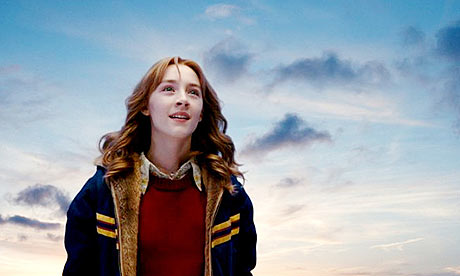 Without these few key conventions a film would be far less effective. Adding a narrator into the mix normally means that the audience can really delve deeper into the film world, making the film far more accessible.
 Its often the case that the narrator will reveal information, this is where dramatic irony could take place or perhaps reveal feelings and emotions of a certain character. Both of these things adds to the audience either empathising or sympathising with characters. Once again drawing them far closer into the film.
Sometimes its the case that narrators aren't there throughout the entirety of films, often they are there at the beginning to set the scene and sometimes appear at the end of close the film.
AS Level Essay 1 Textual Analysis (Mrs Brogans assessment)
AN EDUCATION: http://www.youtube.com/watchv=kcDiHaLak1Q&feature=related
NOWHERE BOY: http://www.youtube.com/watch?v=EvL3pwdjy4k&feature=related
 I have chosen to textually analyse the two films ‘Nowhere Boy’ and ‘An education’. The two films are under the genre heading of ‘drama’. The genre drama is a genre where more naturalistic states are conveyed, often the story line is incredibly believable. The characters appear to go on a sort of journey, tackling different obstacles in their way. Often these obstacles are that, that one my find in their day to day life. This draws audiences in because it gives them something to relate to.
 Its clear in the next scene that the two films set fairly similarly in time, give or take perhaps ten years. Both of the characters settle down to a meal. In ‘nowhere boy’ the room they’re sitting in really shows the time in which it was set. The room resembles what you may find in your grandma’s house, dun coloured walls, patterned plates, candles on the mantle piece. This indicates that John’s guardians are fairly old fashioned and that they might have more old fashioned views. This continues the theme of escapism, as a young boy its clear that John wont feel totally comfortable with the surroundings that he’s in. In ‘an education’ the room that they eat their meal in is extremely similar, once again dull coloured walls ornaments lacking in personality. In both cases I think this shows that the elder residents really care about what other people think, everything has to be by the book, it displays that sort of ‘what will the neighbours think’ viewpoint that people had during that era.
 As we’re introduced to the parent guardian characters, its clear that there a similar relationship displayed in both films. In ‘nowhere boy’ the older male, who we find out to be John’s uncle has a much more at ease relationship with his nephew. We find out that the two characters share the same interests- music. This is shown by the uncle handing over a harmonica. Its clear just by this act that those two characters are much closer. When his Aunt walks in there’s a sense of awkwardness, she appears to be believe in far more traditional roles. This is shown by the fact that her hair is up, and she brings the plates of food in, showing that she has been doing the cooking. Therefore demonstrating traditional roles of men and woman during that time. In ‘an education’ parent relationships are also established. Jennys father appears to be more dominant, asking all the questions almost being slightly aggressive, he seems to be the traditional protective father. Jenny’s mother however seems to have submitted herself to this sort of behavior I’m sure she has become acclimatised to it. She seems to want to reveal her individuality a little bit though. This is shown by the clothes she is wearing. In the dinner scene she’s wearing a bright orange, flowery top. This perhaps shows she’s letting her more creative side through. This could also display a sign of the change in eras, also once again perhaps the theme of escapism and wanting to express herself a little bit more. Not only the way in which she dresses shows that there appears to be a change socially in time, the fact that Jennys father talks a lot about Jenny going to university and therefore presumably having a career. It seems that Jennys mother would have most likely been a house wife, and that Jenny, being a girl and having prospects is something that would have only really starting occurring around Jennys generation.
 Although both John in ‘nowhere boy’ and Jenny in ‘an education’ are around 16-18 they’re parents or guardians appear to still be protective and almost attempt to wrap them in cotton wool. Once again shows the era, as now a-days we have a far more permissive society and we lose our attachment to parents a lot earlier on. In ‘an education’ we see that Jenny has received some flowers from a male admirer. Both of her parents look over her shoulder trying to ascertain who they are from. Her father has a very negative view about the whole situation, he talks about Jenny being to young to receive such an expensive array of flowers. Once again he addresses this situation in a far more aggressive way, however audiences are aware that he’s just concerned for his daughter. Her mother seems far less worried, she seems to think that it’s a very nice gesture. This shows that Jennys mother is her ally. Similarly in ‘nowhere boy’ as John leaves the house, his aunt shouts out of the window ‘Don’t forget you’re glasses John’. This shows she still has a parental hold over her nephew, even though she knows he’s old enough to look after himself she still wants to mother him. Like Jenny’s father she doesn’t really want him to grow up. Also we have established that Johns uncle is his ally, like Jennys mother is hers. This also creates a kind of gender stereotype. As Johns ally is his uncle, a male of course, and Jenny ally is her mother, a female. This shows how men are different to woman, and also perhaps the fact society at the time is just beginning to come out of a time where men and woman have specific roles.
 In the next scene the two characters are seen with their friends. In ‘nowhere boy’ there’s diagetic music playing, Jerry Lee Lewis ‘Wild one’. This reinforces the character of John being a ‘wild one’ and the time. The song is from the era the film is set and is a rock and roll song, which foreshadows Johns later interest in that genre of music. We see John with a friend on a bike, for a few moments he takes his hands of the handlebars. This shows that away from his family home, he is finally allowed to escape. He shrieks and shouts, which shows that he’s expressing himself. This also shows that he has to be far more conservative at home. This also displays his rebellious nature, as a teenager when youre told something isn’t acceptable you’re far more likely to do it. So by him freewheeling through the park with his friends it shows him rebelling ever so slightly to society and his guardians. In ‘An education’ Jenny and her friends are sitting in a café, Jenny is smoking. This not only shows the era, but also shows that she is slightly more mature for her age, which contrasts with John in ‘nowhere boy’ who was acting immaturely with his friend. Jenny is discussing literature which reinforces her intelligence, something that her father was almost boasting about earlier. Her way of escaping is through reading and getting absolutely swept up in the story world. Jenny then goes on to talk about after going to university she is going to ‘become French, going to live in Paris and going to smoke and wear black..’ Once again day dreaming to escape the life she lives at the moment. We have established that she has an extremely tradition family, she wants to escape from this and explore and lead an interesting life, different from her parents. This again shows how the times have changed. Previously is society young woman would have done as their mothers did, worn what their mothers would have worn and prepared for a life at home, like their mothers. Jenny doesn’t want this. She’s rebelling against society, however not in so much of a disruptive way like John. The talk of Jenny wearing black, going to
 Paris
 Although the two characters have shown that they are able to escape ever so slightly. We are reminded again by how old they actually are. In ‘an education’ Jenny bumps into her admirer, she goes over to talk to him. Its clear that she is nervous and doesn’t really know how to respond to anything he is saying to her. He offers to take her to a concert then to supper. Its clear that Jenny seems extremely belittled by this experience, the fact that she has to consult her parents and has never been to supper before. We can tell she is nervous and slightly out of her depth because of how she hesitates and sounds unsure about everything her admirer is saying. When she then consults her father, she is quickly brought down to earth, with him saying no to her. By her father saying no, we are quickly reminded of her age and how her elders have the power to take her dream away. In ‘Nowhere boy’ John decides to flash to one of his piers. Another sign of expressing himself, he gets taken to the head teacher. His freedom is quickly taken away by an elder, which is also what happened in ‘an education’ with Jennys father not allowing her to go to the concert. Johns head teacher talks about him going ‘nowhere’ and john responds with ‘are there genius’ in nowhere’? This is ironic of course because Johns head teacher doesn’t believe that he has any prospects and that he’s not going anywhere, however of course this sets us up for what later happens in the film with John become a musical genius. This contrasts with Jenny, her father tells her that she is a genius however the journey she’s about to embark on, leaves her with nearly ruining her prospects.
NOWHERE BOY: http://www.youtube.com/watch?v=EvL3pwdjy4k&feature=related
 I have chosen to textually analyse the two films ‘Nowhere Boy’ and ‘An education’. The two films are under the genre heading of ‘drama’. The genre drama is a genre where more naturalistic states are conveyed, often the story line is incredibly believable. The characters appear to go on a sort of journey, tackling different obstacles in their way. Often these obstacles are that, that one my find in their day to day life. This draws audiences in because it gives them something to relate to.
The opening of the scene that I have chosen in ‘an education’ starts with Jenny Millar a sixteen year old school girl listening to music. The music is non-diagetic meaning that the characters within the film are able to hear it. This contrasts with ‘nowhere boy’ where the music is diagetic. In both films its immediately clear the ages of he two main characters because they are both wearing school uniform. In the first few seconds of both films its clear that there’s a sense of wanting to escape ever so slightly. In ‘nowhere boy’ the teenage boy john is running from something, a clear sign of wanting to escape, then is awoken from a dream abruptly by a parent figure. The fact that he has been woken up by a parent figure also shows his age. Similarly in ‘an education’ Jenny is trying to escape the world she lives in by listening to French music, she is rudely awoken from her day dream and the little world she has undoubtedly created inside her head, by her father, again her father is telling her to do school work, another indication of age, like in ‘nowhere boy’. Both of the characters are denied their attempt at escapism by their elders.
 Its clear in the next scene that the two films set fairly similarly in time, give or take perhaps ten years. Both of the characters settle down to a meal. In ‘nowhere boy’ the room they’re sitting in really shows the time in which it was set. The room resembles what you may find in your grandma’s house, dun coloured walls, patterned plates, candles on the mantle piece. This indicates that John’s guardians are fairly old fashioned and that they might have more old fashioned views. This continues the theme of escapism, as a young boy its clear that John wont feel totally comfortable with the surroundings that he’s in. In ‘an education’ the room that they eat their meal in is extremely similar, once again dull coloured walls ornaments lacking in personality. In both cases I think this shows that the elder residents really care about what other people think, everything has to be by the book, it displays that sort of ‘what will the neighbours think’ viewpoint that people had during that era.
 As we’re introduced to the parent guardian characters, its clear that there a similar relationship displayed in both films. In ‘nowhere boy’ the older male, who we find out to be John’s uncle has a much more at ease relationship with his nephew. We find out that the two characters share the same interests- music. This is shown by the uncle handing over a harmonica. Its clear just by this act that those two characters are much closer. When his Aunt walks in there’s a sense of awkwardness, she appears to be believe in far more traditional roles. This is shown by the fact that her hair is up, and she brings the plates of food in, showing that she has been doing the cooking. Therefore demonstrating traditional roles of men and woman during that time. In ‘an education’ parent relationships are also established. Jennys father appears to be more dominant, asking all the questions almost being slightly aggressive, he seems to be the traditional protective father. Jenny’s mother however seems to have submitted herself to this sort of behavior I’m sure she has become acclimatised to it. She seems to want to reveal her individuality a little bit though. This is shown by the clothes she is wearing. In the dinner scene she’s wearing a bright orange, flowery top. This perhaps shows she’s letting her more creative side through. This could also display a sign of the change in eras, also once again perhaps the theme of escapism and wanting to express herself a little bit more. Not only the way in which she dresses shows that there appears to be a change socially in time, the fact that Jennys father talks a lot about Jenny going to university and therefore presumably having a career. It seems that Jennys mother would have most likely been a house wife, and that Jenny, being a girl and having prospects is something that would have only really starting occurring around Jennys generation.
 Although both John in ‘nowhere boy’ and Jenny in ‘an education’ are around 16-18 they’re parents or guardians appear to still be protective and almost attempt to wrap them in cotton wool. Once again shows the era, as now a-days we have a far more permissive society and we lose our attachment to parents a lot earlier on. In ‘an education’ we see that Jenny has received some flowers from a male admirer. Both of her parents look over her shoulder trying to ascertain who they are from. Her father has a very negative view about the whole situation, he talks about Jenny being to young to receive such an expensive array of flowers. Once again he addresses this situation in a far more aggressive way, however audiences are aware that he’s just concerned for his daughter. Her mother seems far less worried, she seems to think that it’s a very nice gesture. This shows that Jennys mother is her ally. Similarly in ‘nowhere boy’ as John leaves the house, his aunt shouts out of the window ‘Don’t forget you’re glasses John’. This shows she still has a parental hold over her nephew, even though she knows he’s old enough to look after himself she still wants to mother him. Like Jenny’s father she doesn’t really want him to grow up. Also we have established that Johns uncle is his ally, like Jennys mother is hers. This also creates a kind of gender stereotype. As Johns ally is his uncle, a male of course, and Jenny ally is her mother, a female. This shows how men are different to woman, and also perhaps the fact society at the time is just beginning to come out of a time where men and woman have specific roles.
 In the next scene the two characters are seen with their friends. In ‘nowhere boy’ there’s diagetic music playing, Jerry Lee Lewis ‘Wild one’. This reinforces the character of John being a ‘wild one’ and the time. The song is from the era the film is set and is a rock and roll song, which foreshadows Johns later interest in that genre of music. We see John with a friend on a bike, for a few moments he takes his hands of the handlebars. This shows that away from his family home, he is finally allowed to escape. He shrieks and shouts, which shows that he’s expressing himself. This also shows that he has to be far more conservative at home. This also displays his rebellious nature, as a teenager when youre told something isn’t acceptable you’re far more likely to do it. So by him freewheeling through the park with his friends it shows him rebelling ever so slightly to society and his guardians. In ‘An education’ Jenny and her friends are sitting in a café, Jenny is smoking. This not only shows the era, but also shows that she is slightly more mature for her age, which contrasts with John in ‘nowhere boy’ who was acting immaturely with his friend. Jenny is discussing literature which reinforces her intelligence, something that her father was almost boasting about earlier. Her way of escaping is through reading and getting absolutely swept up in the story world. Jenny then goes on to talk about after going to university she is going to ‘become French, going to live in Paris and going to smoke and wear black..’ Once again day dreaming to escape the life she lives at the moment. We have established that she has an extremely tradition family, she wants to escape from this and explore and lead an interesting life, different from her parents. This again shows how the times have changed. Previously is society young woman would have done as their mothers did, worn what their mothers would have worn and prepared for a life at home, like their mothers. Jenny doesn’t want this. She’s rebelling against society, however not in so much of a disruptive way like John. The talk of Jenny wearing black, going to
  Although the two characters have shown that they are able to escape ever so slightly. We are reminded again by how old they actually are. In ‘an education’ Jenny bumps into her admirer, she goes over to talk to him. Its clear that she is nervous and doesn’t really know how to respond to anything he is saying to her. He offers to take her to a concert then to supper. Its clear that Jenny seems extremely belittled by this experience, the fact that she has to consult her parents and has never been to supper before. We can tell she is nervous and slightly out of her depth because of how she hesitates and sounds unsure about everything her admirer is saying. When she then consults her father, she is quickly brought down to earth, with him saying no to her. By her father saying no, we are quickly reminded of her age and how her elders have the power to take her dream away. In ‘Nowhere boy’ John decides to flash to one of his piers. Another sign of expressing himself, he gets taken to the head teacher. His freedom is quickly taken away by an elder, which is also what happened in ‘an education’ with Jennys father not allowing her to go to the concert. Johns head teacher talks about him going ‘nowhere’ and john responds with ‘are there genius’ in nowhere’? This is ironic of course because Johns head teacher doesn’t believe that he has any prospects and that he’s not going anywhere, however of course this sets us up for what later happens in the film with John become a musical genius. This contrasts with Jenny, her father tells her that she is a genius however the journey she’s about to embark on, leaves her with nearly ruining her prospects.
The two films at first glance are about two completely separate things. However delving deeper its clear that they’re far more similar than first thought. It also displays how within the same genre there are themes that are reoccurring and you cant really escape them. To be successful you just have to recreate these themes in very different ways.
Tuesday, 25 October 2011
We Need To Talk About Kevin

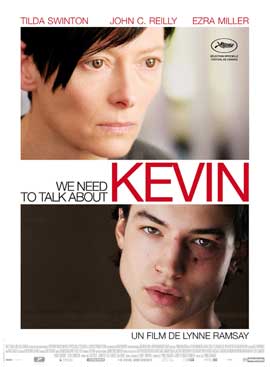 The film itself is very dark and the story line jumps all over the place. It goes very quickly from present to flash backs, then to god knows what. The story is all about a mothers struggle to bond with her son, and because of her lack of parent relationship he turns rather psycho and kills a load of people from his school.
  The film is under the heading 'Thriller', however personally i wouldnt say that it was a stereotypical thriller. Okay, maybe it does have some of the normal conventions, such as eerie music building up the tension, and dark scenes where things appear to lurk. But its not done in a common way. The theme of thriller is conveyed beautifully. The almost very naturalistic state of the characters leaves the audience feeling extremely unsettled. Sitting in the audience all i could think was 'how lucky i am to lead such a normal life'. It makes audiences question life decisions and relationships with friends and family members.
There is extremely limited dialogue within the film, this means that audiences can really get inside the characters thoughts, almost with their own take on the situation. This adds to thriller conventions, if audiences begin to relate things with their own situations then it becomes more eerie as it is far closer to home.
 The main thing that got me thinking about media, was the glaringly obvious Mise-en-scene. Im pretty sure that even someone who wasnt studying AS media could pick this detail out. There was an extremely reoccurring theme with the colour red. The film began at the tomato festival, it then proceeded to the womans house being covered in red paint, also red jam, a red bouncy ball, red on peoples clothing, red curtains. You name it, it was red. Another theme was things getting splattered or squished, Kevin the young murderer often squished jam inbetween his sandwiches, and squished his sisters cereal, also his mother squished and stamped on a water pistol with had red paint in it. Of course none of this happened by accident, it was all foreshadowing for the later events.
 I found the film extremely interesting from a media point of view and I think in years to come this film should be used as a tool in media lessons.
Friday, 21 October 2011
The Editing Process- The Hangover
After the completion of the filming, we all agreed that we did very well indeed. We just had to wait to get back to school to begin the editing process. The first lesson back we all watched the different sections of the video. At first glance there were a few apparent problems. Firstly in some of the shots we filmed later into the evening, the lighting had faded dramatically, and the artificial light of Aimee's conservatory wasn't quite enough to support our filming. The second problem was that the shots we filmed outside were very windy, and we couldn't actually hear what Chris was saying.
As a group we sat down and thought about how we could combat these problems. Luckily Aimee and I have had experience in lip syncing. So we thought this would be a perfect opportunity to put our skills into practise. We had to find a time that Chris was free so we could record his voice then lip sync it with the video. Luckily this task was fairly easy, and we all agree that it looks very realistic.
The second problem of the dimmed lighting, was a little bit harder to deal with. We used the editing softwear to try and lighten it. However we didn't realise quite how dark the shots were. Every time we tried to lighten it the shots became incredibly gritty and grainy. We have all learnt now to make sure that we don't run out of lighting when it comes to filming our final film opening.
Despite these two problems there wasn't much else that went wrong. Of course there were some more difficult bits and bobs. After watching back the real Hangover opening sequence we realised that in some cases there was speech over shots of other people. This is something we didn't account for when filming. Luckily we quickly worked out how to unlink images and sounds then overlap them.
It was quickly clear that we were going to produce a piece of work that we were all proud of. As a first attempt we believe we have really tried our best and have learnt all the skills we need for future projects. We're all glad that a few minor things went wrong, because now we can really learn from them.
As a group we sat down and thought about how we could combat these problems. Luckily Aimee and I have had experience in lip syncing. So we thought this would be a perfect opportunity to put our skills into practise. We had to find a time that Chris was free so we could record his voice then lip sync it with the video. Luckily this task was fairly easy, and we all agree that it looks very realistic.
The second problem of the dimmed lighting, was a little bit harder to deal with. We used the editing softwear to try and lighten it. However we didn't realise quite how dark the shots were. Every time we tried to lighten it the shots became incredibly gritty and grainy. We have all learnt now to make sure that we don't run out of lighting when it comes to filming our final film opening.
Despite these two problems there wasn't much else that went wrong. Of course there were some more difficult bits and bobs. After watching back the real Hangover opening sequence we realised that in some cases there was speech over shots of other people. This is something we didn't account for when filming. Luckily we quickly worked out how to unlink images and sounds then overlap them.
It was quickly clear that we were going to produce a piece of work that we were all proud of. As a first attempt we believe we have really tried our best and have learnt all the skills we need for future projects. We're all glad that a few minor things went wrong, because now we can really learn from them.
Wednesday, 12 October 2011
Favourite Film Openings...
Before i could begin thinking about what i wanted to include in my film opening, i thought it might be quite a good idea to look at three of my favourite films and their openings.
1) Atonement.
http://www.youtube.com/watch?v=nqjEXD0T5Lo
I really like the opening two minutes to this film, because of how ambiguous it is. It gives audiences a chance to try and work out what will happen. I think it creates an immediate interaction and draws the audience in.
2) Glorious 39.
http://www.youtube.com/watch?v=FplsAZrpw3khttp://www.youtube.com/watch?v=FplsAZrpw3k
The opening scene of Glorious 39 is absolutely charming. It introduces the characters, but not in enough detail, so it keeps the audience guessing. It also introduces the time period and the setting, which i think are important qualities.
3) Never Let Me Go.
http://www.movie2k.to/Never-Let-me-Go-watch-movie-428431.html
I was really intrigued by the opening of Never Let Me Go, because of how different the opening is from the majority of the film. Also when considering my film opening, i wanted to have a narrator.
1) Atonement.
http://www.youtube.com/watch?v=nqjEXD0T5Lo
I really like the opening two minutes to this film, because of how ambiguous it is. It gives audiences a chance to try and work out what will happen. I think it creates an immediate interaction and draws the audience in.
2) Glorious 39.
http://www.youtube.com/watch?v=FplsAZrpw3khttp://www.youtube.com/watch?v=FplsAZrpw3k
The opening scene of Glorious 39 is absolutely charming. It introduces the characters, but not in enough detail, so it keeps the audience guessing. It also introduces the time period and the setting, which i think are important qualities.
3) Never Let Me Go.
http://www.movie2k.to/Never-Let-me-Go-watch-movie-428431.html
I was really intrigued by the opening of Never Let Me Go, because of how different the opening is from the majority of the film. Also when considering my film opening, i wanted to have a narrator.
Tuesday, 11 October 2011
The Hangover- Filming Task.
 In groups of 6 we were instructed to recreate the opening of the film 'The Hangover'. We had to ensure that our interpretation was as accurate as it could get, frame to frame. We had to organise ourselves so we each had different roles. One was the Producer, then the director, then camera man and floor manager. I took on joint role as the Director. I knew that this would be one of the more challenging roles, however i enjoyed the thought of using my own ideas and controlling a group of people.
 As role of director i would over see what the camera operator and the floor manager where doing. Although my role of director was shared i had to ensure that i didnt totally take over.
PLANNING-
My group and I watched the opening of the hangover copious times and wrote down what happened frame from frame. We also drew a quick sketched story board of what each frame showed. This visual aid would make it a lot easier for us to work from.
We all had to organise a day that we were free, as we wanted to get the filming done over a shorter period of time, so that it was less likely for us to muck up the continuity. After agreeing the day, we ensured that we brain stormed many ideas so that when it came to filming we were set to begin immediately.
FILMING-
For the filming we needed 7 actors. My co-director's parents were more than happy to lend a helping hand and agreed to play the part of the parents, a friend who happened to look a lot like the female lead, Darcy Sadd agreed to help, Jordan Giles- the floor manager and Hugh Riseborough the assistant floor manager were also able to help. We had a slight issue finding our male lead. Firstly Tristen Butler an A-level drama student volunteered is services, however unfortunately he cancelled a day before the filming, next James Softely offered to play the part, however a few hours after agreeing, he pulled out. Getting desperate i asked a friend Steven Hadley. He was all set, however ten minutes before the filming started he had to leave for a family matter. As the director i took it apon myself to find an appropriate male lead. Right at the last minute a friend,Chris Fox was able to help. He took on the role with much enthusiasm as he stated 'Its my favourite film ever'.
The most appropriate location that me and other director, Aimee Shingfield could think of, was actually her house. Aimee lives in a large farm house, with access to fields and tracks which would be perfect for the filming.
We decided that it would be a good idea to film the outside scenes first, seeing as the light was going to fade in a matter of hours. Aimees dad drove us to the track on theyre farm and we set up all the equipment. All the outside filming went really well, we had to ensure that the sun was behind us at all times. The only problem we had was that the speach was a little quieter than we expected due to the wind. However this can be fixed.
All of the filming went really well, the actors cooperated in every scene and followed our directions.
The light faded a lot faster than we anticipated and some of the inside scenes were a little darker, but we really couldnt help this.
Watching all the footage back i feel really proud that we were able to complete all the filming in the space of about 2-3. I felt like the entire team worked so well together. We cooperated as a group of people. We all stayed focused on the job in hand and used our skills to the best of our abilities.
Friday, 7 October 2011
Different Camera and Film Shots
EWS (extreme wide shot): This view is so far from the subject that he isnt even visible. More commonly used as an establishing shot.
VWS (very wide shot): The subject is barely visible, but the emphasis is still on placing him in his environment.
WS (wide shot): The subject takes up the full frame, or at least as much as is possible.
MS (mid Shot): Shows some part of the subject in more detail, whilst still giving an impression of the whole subject.
MCU (medium close up): This is half way between MS and CU.
CU (close up): A certain feature or part of the subject takes up the whole frame.
ECU (extreme close up): The ECU gets very close in and shows extreme detail.
Cut in: Shows some other part of the subject in detail.
CA (cut away): A shot of something other than the subject.
Two Shot: A shot of two people, framed like a mid shot.
OSS (over the shoulder shot): Looking from behind a person as the subject.
Noddy Shot: Usually referes to shot of the interviewer, listening and reacting to the subject.
POV (point of view shot): Shows a view from the subjects prospective.
Weather Shot: The subject is the weather, can be used for other purposes maybe background, for graphics.
VWS (very wide shot): The subject is barely visible, but the emphasis is still on placing him in his environment.
WS (wide shot): The subject takes up the full frame, or at least as much as is possible.
MS (mid Shot): Shows some part of the subject in more detail, whilst still giving an impression of the whole subject.
MCU (medium close up): This is half way between MS and CU.
CU (close up): A certain feature or part of the subject takes up the whole frame.
ECU (extreme close up): The ECU gets very close in and shows extreme detail.
Cut in: Shows some other part of the subject in detail.
CA (cut away): A shot of something other than the subject.
Two Shot: A shot of two people, framed like a mid shot.
OSS (over the shoulder shot): Looking from behind a person as the subject.
Noddy Shot: Usually referes to shot of the interviewer, listening and reacting to the subject.
POV (point of view shot): Shows a view from the subjects prospective.
Weather Shot: The subject is the weather, can be used for other purposes maybe background, for graphics.
Research- Rule Of Thirds.
In film, the rule of thirds is a concept in which the frame is divided up into nine sections, these sections are imaginary. This creates reference points which act as guides for framing a shot.
 In most shots of people, the main line of interest is going straight through the eyes. The eyes are normally positioned 1/3 down the frame. However this really depends of the type of shot and if its actually possible to place the characters eyes like this.
The intersection of the two lines is sometimes called the 'power point' or 'crash point'. Points of interest in the shot dont actually have to touch these lines to take advantage of the rule of thirds.

The intersection of the two lines is sometimes called the 'power point' or 'crash point'. Points of interest in the shot dont actually have to touch these lines to take advantage of the rule of thirds.
Tuesday, 4 October 2011
What is 'Genre'?
Before thinking about what film, television, play or book I want to endeavour in I always think about the genre. Genre is a way of catagorising something, through what the main theme is. For example we have 'triller' as a genre and ' romantic comedy'.
In most cases I can tell immediately what the genre is just by looking at the sleeve, cover, program, whatever. The marketing crew always try and make sure that the genre is fairly apparant, this is so that the comsumer easily knows what genre to expect without reading to far into it. Also, when film makers are creating a film its always pretty imperative that they have a indefinate preconceived idea of genre, so they know what audience to aim their film at.
In most cases I can tell immediately what the genre is just by looking at the sleeve, cover, program, whatever. The marketing crew always try and make sure that the genre is fairly apparant, this is so that the comsumer easily knows what genre to expect without reading to far into it. Also, when film makers are creating a film its always pretty imperative that they have a indefinate preconceived idea of genre, so they know what audience to aim their film at.
Wednesday, 28 September 2011
Breaking the Fourth Wall
When we talk about the 'Fourth Wall' often theatre is brought to mind, however it is also used in the film and television industry aswell.
Breaking the fourth wall is where the characters acknowledge their fictionality, they do this by addressing the audience. When this is done in film its often used to draw the audience in, this is often risky, as it could look cheep, or cheesy. However in some cases it works perfectly. It gives the audience a bigger insite into the story world and makes them relate to the character.
Breaking the fourth wall is where the characters acknowledge their fictionality, they do this by addressing the audience. When this is done in film its often used to draw the audience in, this is often risky, as it could look cheep, or cheesy. However in some cases it works perfectly. It gives the audience a bigger insite into the story world and makes them relate to the character.
Don LaFontaine and Voice Overs.
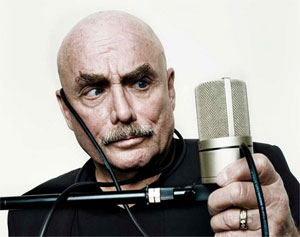 Don LaFontaine may be an ufamiliar name, his voice however, is most likely one of the most recgonised. He is the man that does the voice over for many huge blockbuster films. His basey voice is the opening narrative for a lot of famous films. His voice helps to set scenes, create connections to character and inform audiences. Although his voice is one of the more striking and recognised ones, as long as you have a clear voice which can project affectively then narration is a great way to open a film sequence.
Tuesday, 27 September 2011
How Fargo Contradicted Expectations.
 Fargo was sold as a triller, on reflection of watching the film it became very much apparent that some key things juxtaposed the common, stereotypical expectations of the thriller genre, for example:
- Hardly Any Suspense
- Fairly easy plot
- No twists
- A lot of dialogue
- Not eerie
- Dont build a relationship with any characters
- Set in snow- white, a paradox of the usual 'Dark' setting
- Flat ending
- Olderfilm- so lacked intensity
- Unclear about overall tone of the film
- Limited action sequences
- Almost comic characters and scenes.
Conventions of Main Stream Thrillers
 Thrillers are often thought about as films that rely heavily on stimulating the mood of audiences, most commonly stimulating the mood of anticipation or anxiety. Some devices used in novels are used, such as cliff hangers and red herrings. Also there is a lot to do with editing devices, such as quick cuts and strange camera angles. Also a huge convention is the lighting, stereotypically thrillers are very dark films, so things can lurk in the shadows etc. Often there will be a character that the audience relates with, that character will most likely get themselves into danger, this will result in the audience on the edge of their seats.
Tuesday, 20 September 2011
COEN Brothers - Filmography.
COEN Bro's
 Joel Coen and Ethan Coen are professioanly known as the Coen Brothers, they work in partnership as American Film Makers. They both are aclaimed writers, directors and producers, however recently Joel got awarded for directing and Ethan for producing. After graduating Joel worked as an production assistant on some films and a couple of music videos. This would stand him in good stead and he developed a talent for editing. Following this, he became an assistant editer on the film 'The Evil Dead' (1980). The brothers then worked together writing and directing their first film- 'Blood Simple'. Blood Simple was a horror, which has a simple plot line however with underlying twists, it also housed dark humour and mise en scene. This film was a success, and promted the brothers to win an award at Sundance. The next film endeavour was 'Crimewave' another success. The Coen brothers are still creating film masterpieces to this day. It could be argues that now the brothers are more established they aim to a much more left field audience. Its clear they like to move away from the main stream and try and tackle new challenges in the highly competative film world. They seem to juggle around genre and escape from the modern stereotypes film tend to have these days. Often they will try and put to opposing genres together, such as triller and comedy. With their tallent and understanding of what the public wants, this usually proves to be a big hit.
Last Ten Films-
1. True Grit (2010)
2. A woman, a gun, and a noodle shop. (2009)
3. A Serious Man. (2009)
4. Burn After Reading. (2008)
5. No Country for Old Men. (2007)
6. Paris, Je T'aime. (2006)
7. The Lady Killers. (2004)
8. Intolerable Cruelty. (2003)
9. The Man Who Wasnt There. (2001)
10. O Brother, Where Art Thou? (2000)

Last Ten Films-
1. True Grit (2010)
2. A woman, a gun, and a noodle shop. (2009)
3. A Serious Man. (2009)
4. Burn After Reading. (2008)
5. No Country for Old Men. (2007)
6. Paris, Je T'aime. (2006)
7. The Lady Killers. (2004)
8. Intolerable Cruelty. (2003)
9. The Man Who Wasnt There. (2001)
10. O Brother, Where Art Thou? (2000)
Exploring Genre Through Analysis of Film Openings
Dawn of the Dead- Zack Snyder.
Denotation and connotation.
Denotation and connotation.
- Image of the skull - we now know that death will be a key theme.
- Green coloured Walls in the hospital - makes us think of sick, illness, uneasy.
- She keeps checking her watch - she's ordinary, she does long shifts, works hard.
- Emmergency sign behind her shown- this forshadows later events.
- Forms a relationship with girl - establishes she may be a key character.
- Picure of couple shown - theyre in a loving long term relationship.
- Girl appears in dimmed lights - fear of the unknown.
- Woman deals with the situation - shes a strong character, coping under pressure.
- 'Cabin Fever' - Title forshadows, thinks of isolation.
- Titles last a long time - slowely lowering us into the story world.
- Establishes location and setting - we realise theyre in isolation.
- Lone dodgy looking man - sets an eerie tone.
- Cuts quickly to american girl (civilisation) - sets up, worlds colliding.
- Home made movie of little girl - she will be a significant character.
- Little light, drab and grey - negative feeling, tired and down.
- He wraps a present precisely - He does things well, takes care, perfectonist.
- Negative attitude between parents - dysfunctional relationship, could change.
- Reflectng on past - he misses the strong bond with daughter, significant.
Mise-En-Scene
Mise-En-Scene is all about what you see in the frame yourself, its a french term that means 'what is put into the frame'. It's visual information infront of the camera, it communicates essential information to the audience.
When thinking about creating a frame, you must consider that even the way you move in the scene, could forshadow, also the way in which things are positioned may be pivitol. Its clear that you communicate more than whats not actually being said.
5 Elements-
1) Setting and Props- settings are pivitol, sometimes stereotypically TV uses less of setting because TV is smaller than cinema film. Although images of location are sometimes important on establishing character, theme and genre.
2) Costume, Hair and Makeup- this is extremely important when introducing what genre and era, normally as soon as we see a character, we have made up our minds about the two of these. It also helps to introduce the characters personality.
3) Facial expressions and Body Language- In general life aswell as film this is key to the understanding peoples thoughts. Often in film and television facial expressions and body language is emphasised by camera's zooming in, or focusing on a certain action.
4) Lighting and Colour- This is key to finding out what the genre is, and the mood or the theme of either the entire film, or just a certain characters personality.
5) Positioning of character/objects within in the frame- Important objects could be positioned so that it draws the reader in to look at them. This could because they are of some relevance or importance later on. Positioning of character could to show parts of their personality, they may be behind or bellow someone to show hierarchy for example.
When thinking about creating a frame, you must consider that even the way you move in the scene, could forshadow, also the way in which things are positioned may be pivitol. Its clear that you communicate more than whats not actually being said.
5 Elements-
1) Setting and Props- settings are pivitol, sometimes stereotypically TV uses less of setting because TV is smaller than cinema film. Although images of location are sometimes important on establishing character, theme and genre.
2) Costume, Hair and Makeup- this is extremely important when introducing what genre and era, normally as soon as we see a character, we have made up our minds about the two of these. It also helps to introduce the characters personality.
3) Facial expressions and Body Language- In general life aswell as film this is key to the understanding peoples thoughts. Often in film and television facial expressions and body language is emphasised by camera's zooming in, or focusing on a certain action.
4) Lighting and Colour- This is key to finding out what the genre is, and the mood or the theme of either the entire film, or just a certain characters personality.
5) Positioning of character/objects within in the frame- Important objects could be positioned so that it draws the reader in to look at them. This could because they are of some relevance or importance later on. Positioning of character could to show parts of their personality, they may be behind or bellow someone to show hierarchy for example.
Tuesday, 13 September 2011
Initial Ideas.
After I discovered what what my brief was ( to create the opening of a feature film in any genre to last 2 minutes), I had a quick brain storm in order to think of ideas.
I thought that it might be easier to try and create my story from something that had happened in my life. I didnt want to create a typical teenage film, so I had to really think about how I could incorporate something that wouldn't come across soppy or insignificant.
After a long think, i recalled an event that happened that i could dramatise and make more interesting.
I recently found my mothers diary from when she was the same age as me, and as her and I don't have a particularly close relationship with my mother, I was intrigued to find out that in fact we lead extremely similar lives at that age.
Although just from that I realised it wasn't a very interesting story, I quickly began to think of ways that i could develop it.
I knew immediately that this was the story i wanted to create the opening two minutes for. It would be something that i could get extremely involved in, because really it was a story about me. I could use my own emotions and filter them into making a film that i truly cared about.
Subscribe to:
Comments (Atom)